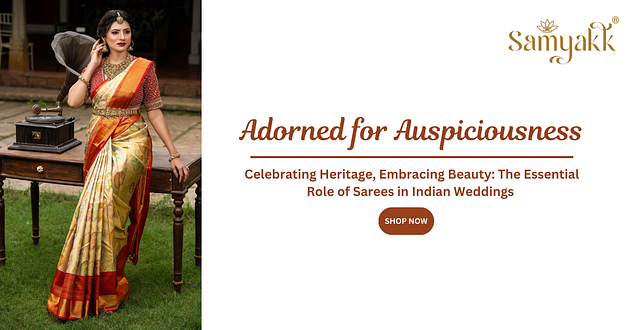
In the vibrant tapestry of an Indian wedding, every element, from the intricate decorations to the elaborate rituals, holds a profound significance. Among these, the saree stands out as a symbol of timeless elegance, cultural heritage, and the bride’s journey into womanhood. More than just a garment, sarees in Indian weddings are a confluence of tradition, personal expression, and deep-rooted symbolism.
A Legacy Woven Through Time
The saree’s history is as rich and enduring as India itself. Evidence suggests its presence in the Indus Valley Civilization, dating back to 3300 BCE. Over millennia, the saree has evolved into a versatile drape, a testament to the enduring ingenuity of Indian textiles. Sarees have transcended mere clothing, becoming a canvas for regional artistry and cultural identity.
Silk Sarees: A Touch of Opulence
Silk sarees, particularly Kanjivaram Sarees and Banarasi Sarees, embody the luxurious side of Indian weddings. The shimmering texture and intricate weaving techniques, passed down through generations, imbue these sarees with an unmatched elegance. Kanjivaram Sarees, famed for their zari work and rich color palettes, often depict mythological tales or temple motifs, adding a touch of cultural significance. Banarasi Sarees, on the other hand, are renowned for their use of gold and silver brocade, creating a sense of regal opulence befitting a momentous occasion.

Pattu Sarees: A Symbol of Elegance
Pattu sarees, a type of silk saree, are particularly popular in South Indian weddings. Known for their vibrant colors and intricate designs, Pattu sarees are often passed down through generations, becoming cherished family heirlooms. The word “Pattu” in Tamil means “silk,” reflecting the saree’s luxurious texture and regal appearance. Pattu sarees are often adorned with gold zari work, adding to their elegance and value.

A Canvas for Cultural Expression
Sarees in Indian weddings are not just about beauty and opulence; they are also a canvas for cultural expression. The choice of saree, its color, and its design often reflect the bride’s region, religion, and personal style. For instance, in South Indian weddings, red and gold Pattu sarees are a popular choice, symbolizing auspiciousness and prosperity. In North Indian weddings, Kanjipuram Silk Sarees in vibrant hues like green and yellow are common, representing new beginnings and joy.

The Online Saree Shopping Experience
In today’s digital age, online saree shopping has become a popular and convenient option for brides and their families. Online platforms offer a vast selection of sarees from across India, including Kanjipuram Silk Sarees, Banarasi Sarees, Pattu sarees, and many more. Brides can browse through thousands of designs, compare prices, and have sarees delivered to their doorstep, making the shopping experience hassle-free and enjoyable.

Silk Saree Designs: A Journey Through Traditions
The world of silk saree designs is as diverse as India itself. Each region boasts its unique styles and weaving techniques, passed down through generations. Kanjipuram Silk Sarees from Tamil Nadu are renowned for their intricate zari work and rich color palettes. Banarasi Sarees from Uttar Pradesh are famous for their use of gold and silver brocade, creating a regal look. Patola sarees from Gujarat showcase intricate geometric patterns and vibrant colors. Venkatagiri sarees from Andhra Pradesh are known for their lightweight texture and delicate designs.

Sarees for Wedding: A Reflection of Personal Style
Beyond regional traditions, sarees in Indian weddings also reflect the bride’s personal style and preferences. Modern brides often opt for contemporary designs that incorporate traditional elements with a modern twist. Designer sarees have emerged as a popular choice, offering unique cuts, bold colors, and innovative embellishments. Whether it’s a classic Kanjivaram Silk Saree or a modern designer creation, the saree becomes a personal expression of the bride’s individuality.
The Saree: A Symbol of Femininity and Grace
The saree, in its essence, embodies the ideal of Indian womanhood. The act of draping a saree itself is considered a ceremony, requiring skill and a certain poise. Mastering the saree is seen as a mark of maturity and grace. On a wedding day, the saree accentuates the bride’s beauty and elegance, projecting confidence and a readiness to embark on a new chapter.
Conclusion: A Celebration of Self and Culture
In conclusion, sarees in Indian weddings are far more than just beautiful garments. They are a confluence of history, symbolism, and personal expression. From the heirloom Kanjivaram Silk Saree to the modern designer saree, each saree tells a story, reflecting the bride’s heritage, aspirations, and individuality. As she walks down the aisle, draped in a saree, the bride becomes a living embodiment of her culture, celebrating not just her union but also the enduring legacy of the saree itself.
Comments
Post a Comment